Applications
Learning
 Part of the Oxford Instruments Group


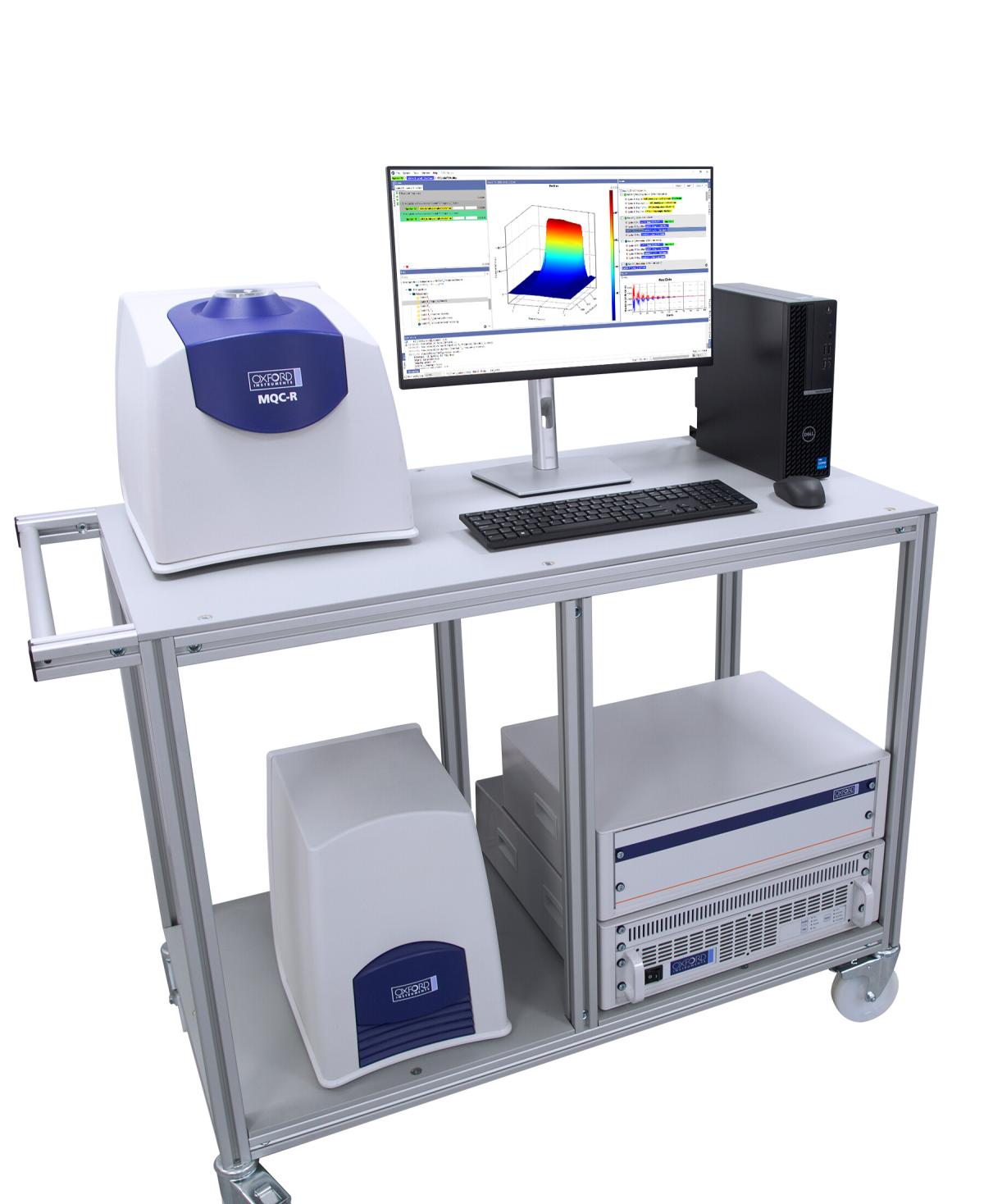
A flexible benchtop time domain NMR research instrument for materials analysis. MQC-R is a highly configurable, benchtop time domain nuclear magnetic resonance (TD-NMR) instrument for flexible analysis of materials across academia and industry. Its modular design provides wide ranging options for varying sample temperature and pulsed field gradient packages to measure diffusion and 1D profiles.
View Brochure Request PricingUnlike other techniques used to obtain the same sample properties, TD-NMR is non-invasive and non-destructive, often requires minimal sample preparation, and characterises both transparent and opaque samples. Another major advantage of TD-NMR is that it does not require hazardous chemicals and can be used on a laboratory benchtop, moveable workstation, or near line in manufacturing.
MQC-R builds on our long history of innovative and industry leading TD-NMR research instruments. Combined with our comprehensive and worldwide customer and applications support; it enables researchers to accelerate new product development, investigate and characterise new materials, and improve manufacturing processes.
TD-NMR provides insight into material composition, structure, and transport, revealing molecular environments, phase behaviour, and dynamic processes:

TD‑NMR enables rapid assessment of food composition, microstructure, and physical behaviour, providing insight into phase distribution, molecular interactions, and processing effects:

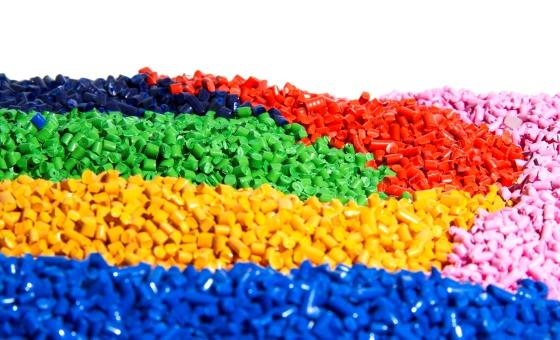
TD‑NMR provides fast, non-destructive insight into polymer composition, structure, and performance, enabling analysis of physical properties, phase behaviour, and processing:
TD‑NMR enables rapid, non-destructive analysis of pharmaceutical composition, formulation structure, and stability, providing insight across development and manufacturing:

TD‑NMR provides powerful insight into cement, concrete, and porous materials, enabling non-destructive analysis of porosity, moisture transport, and durability throughout processing and service life.

The MQC‑R features a 23 MHz magnet, enabling highly sensitive and time‑efficient TD‑NMR analysis. It is designed to be configurable and upgradeable as requirements evolve. The system supports probes with diameters from 10 to 26 mm, allowing analysis of both small samples for solid detection and larger volumes up to 14 ml. Interchangeable probes make it easy to switch between sample sizes, nuclei such as ¹H and ¹⁹F, and variable temperature configurations.
A liquid variable temperature option enables characterisation across a fixed point or a range between –5 and 70°C (10 and 18mm 1H only). The pulsed field gradient option, exceeding 3.0 T/m, supports advanced analyses including diffusion measurements, droplet size distribution, and 1D profiling. The instrument is supported by intuitive, customisable software with advanced experimental capabilities such as 2D relaxation and diffusion distributions and 1D spatially resolved relaxation. A moveable workstation option also allows the system to be easily transported around the lab or between locations.
The MQC-R can perform a wide range of experiments to determine many important sample properties.
MQC-R uses T1 and T2 relaxometry to determine water relations in foods as well as fat, e.g. in milk powders. Advanced software options enable 2-Dimensional experiments, such as T1-T2 and T2-Diffusion, used to further investigate multi-component systems Diffusion measurements discriminate water and fat, enabling measurement of droplet size.
MQC-R measures molecular mobility to quantify amorphous versus crystalline content, curing and hardening behaviour, cross‑link density, and additive levels (e.g. plasticisers or oils), It can also measure molecular diffusion, enabling determination of polymer chain size (e.g. molecular weight of PEG) and droplet size in emulsion polymer systems such as paints and coatings.
MQC-R allows measurement across a diverse range of samples; tablets, powders, ointments and biologics which can be measured non-invasively and non-destructively as they are, or in a sealed vial, syringe or cartridge. Typical measurements relate to: fluorine, moisture and amorphous content; protein denaturation/aggregation, diffusion, droplet size and 1D profiles (MRI) to monitor sedimentation.
TD‑NMR enables detailed characterisation of cement and concrete by measuring porosity and pore size distribution, as well as tracking moisture ingress, drying, and hardening processes over time. It can also be used to evaluate the effects of formulation, processing conditions, and curing strategies, including durability factors such as freeze–thaw behaviour. These insights support the development and optimisation of more sustainable cement and concrete materials.

© Oxford Instruments 2026
 Powered by Bioz